What are encaustic tiles?
The earliest encaustic tiles in Britain date to the mid 13th century and were a progression from earlier “mosaic” floor tiles, and were mainly confined to monastic and royal buildings. The technique is likely to have come from France where there was a thriving encaustic tile industry from about 1200 AD.
Original medieval encaustic tiles were manufactured by impressing a carved wooden stamp into the surface of an unfired red clay tile and filling the depressions with white slip (pipe) clay, allowing the tile to dry to the leather hard stage and then scraping back the surface to a reasonably flat, level finish. Lead oxide (often with impurities, accidental or deliberate) was then sprinkled over the surface and the tile single-fired in a wood burning kiln to c1000˚C.
Wear and tear on the wooden stamps, and impurities and inclusions in the clay and the glaze gave a very variable finish to the fired tile and it is these characteristics that modern reproduction methods attempt to emulate. The technique is very hands-on, much as the original manufacture would have been although gas or electric firing is now the general rule.
https://www.heritagecrafts.org.uk/craft/encaustic-tile-making/
What do I make?
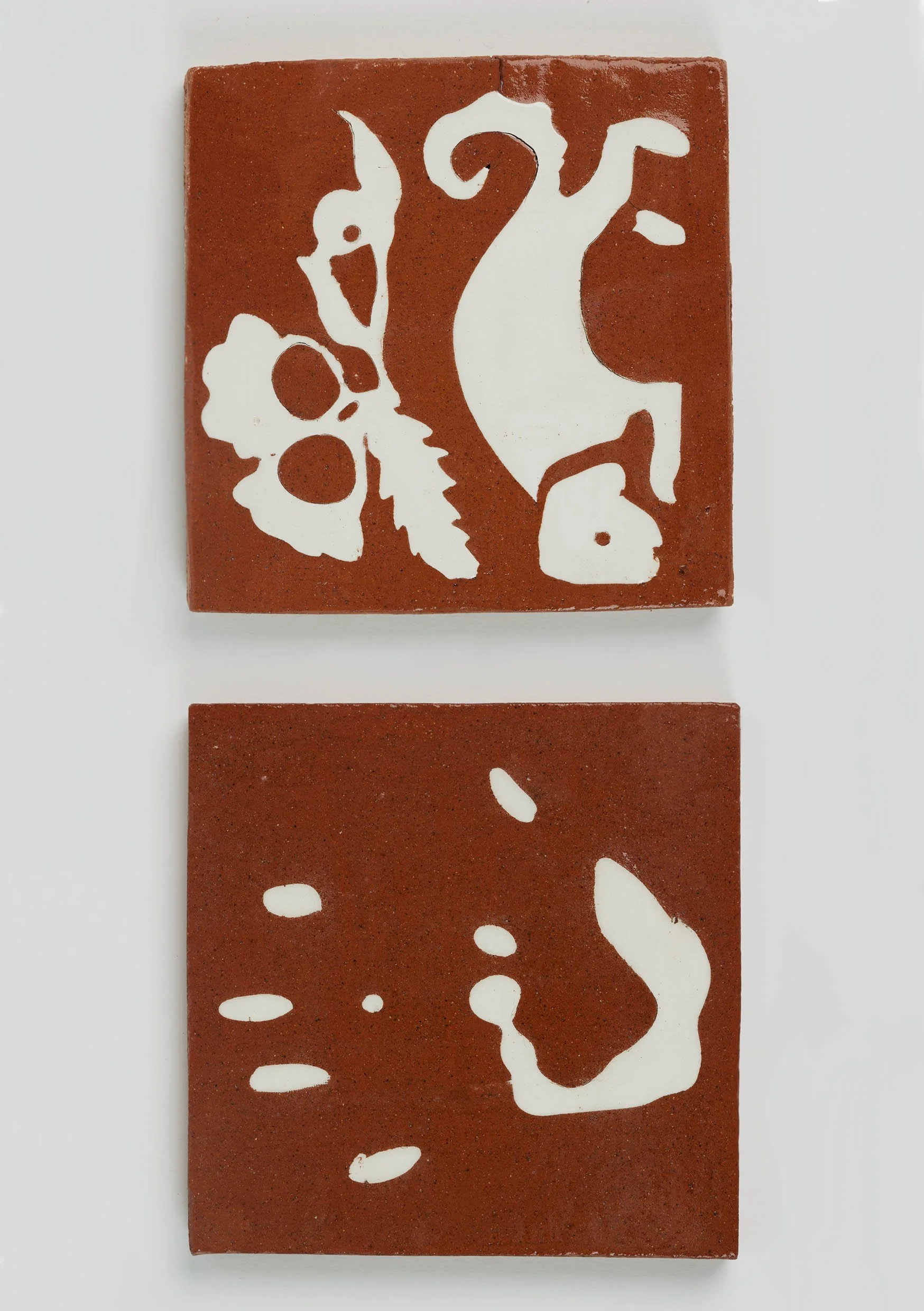
I make medieval style encaustic tiles. My use of historically accurate medieval craft techniques is central to my practice, allowing me to create contemporary artefacts that straddle both personal narrative and collective tradition. I see historical craft not simply as something to preserve, but as a living process that can bring people together through shared making, storytelling, and creativity. My tiles are autobiographical in that they depict real things, people, and references to my own life, much like original encaustic tiles.
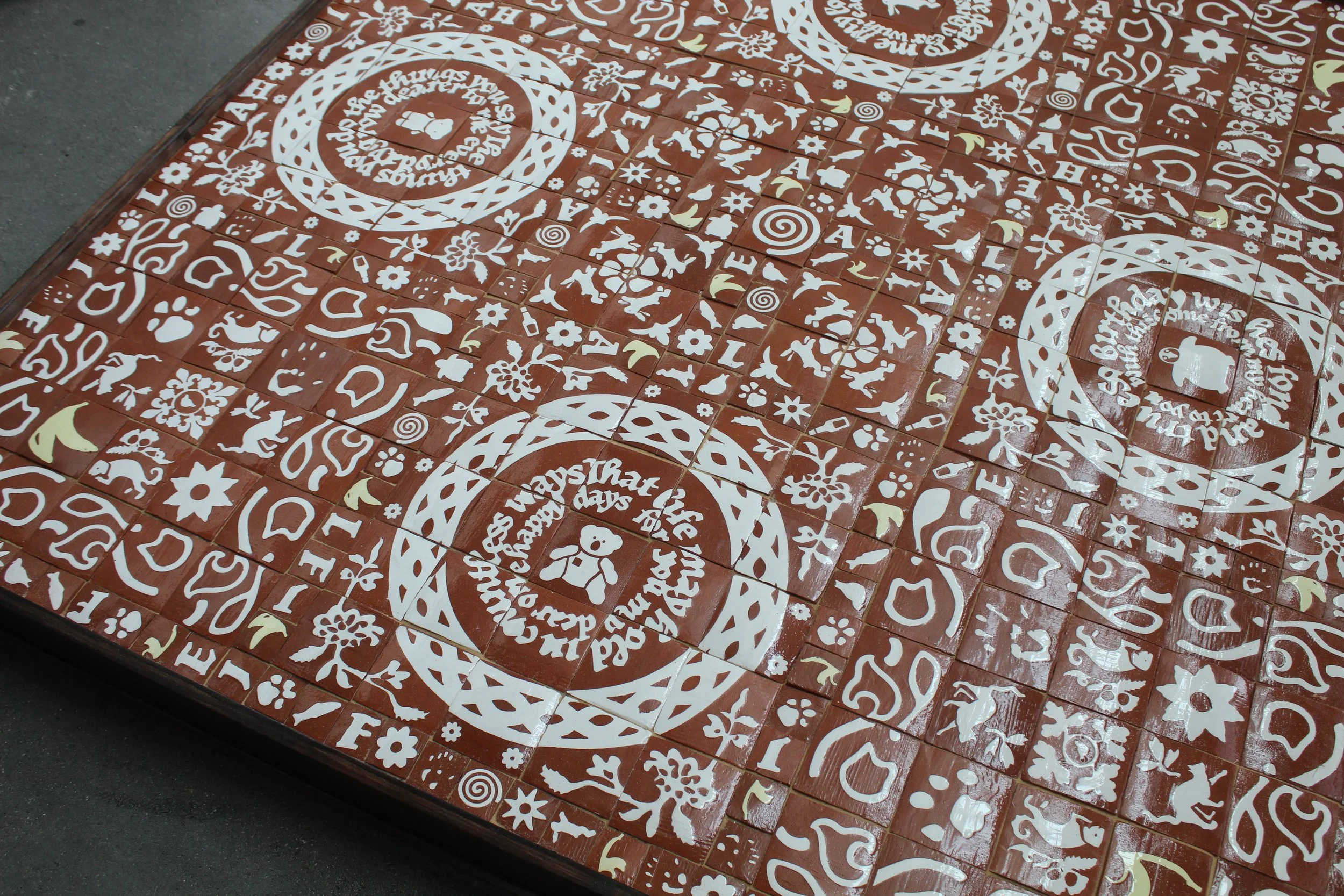
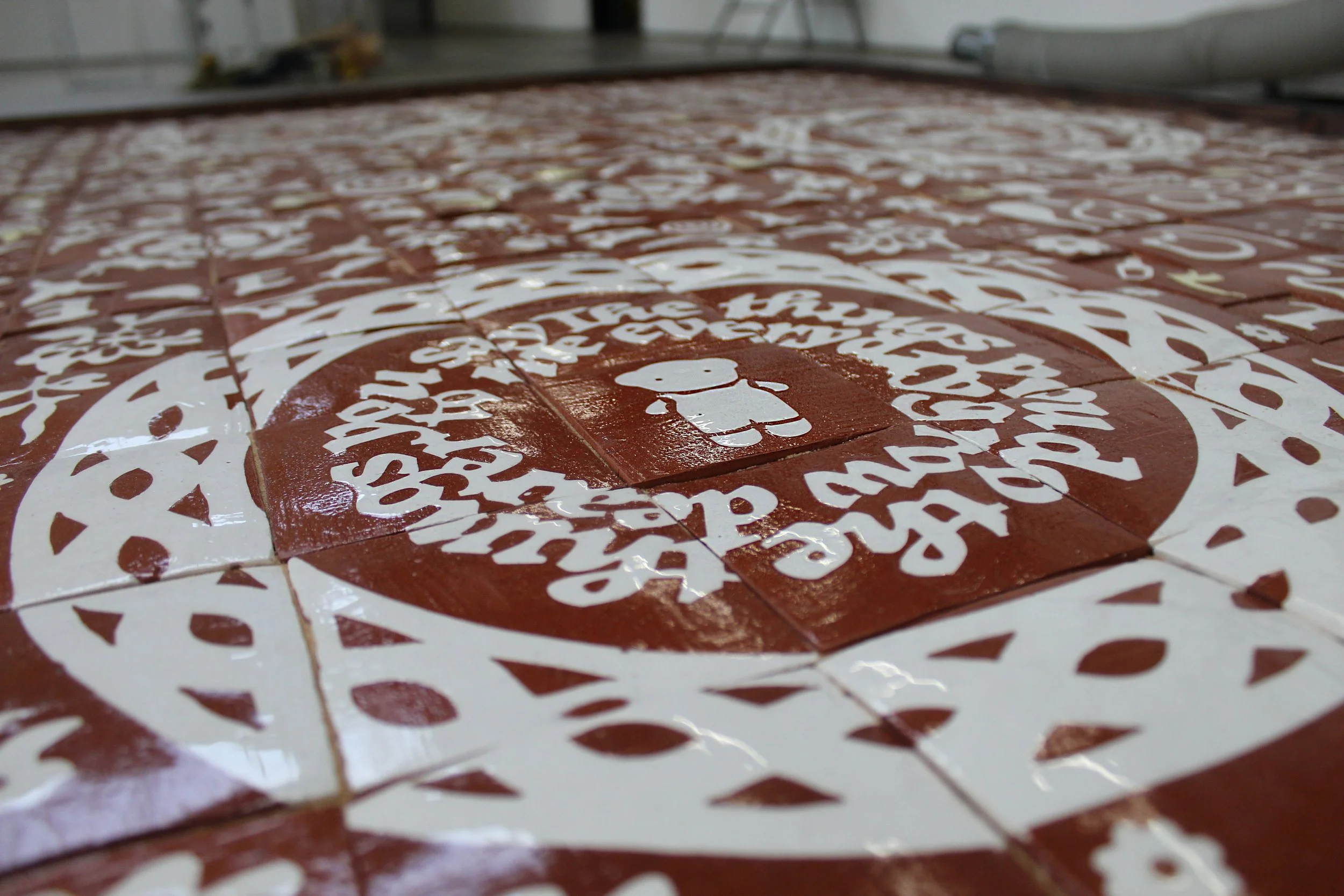
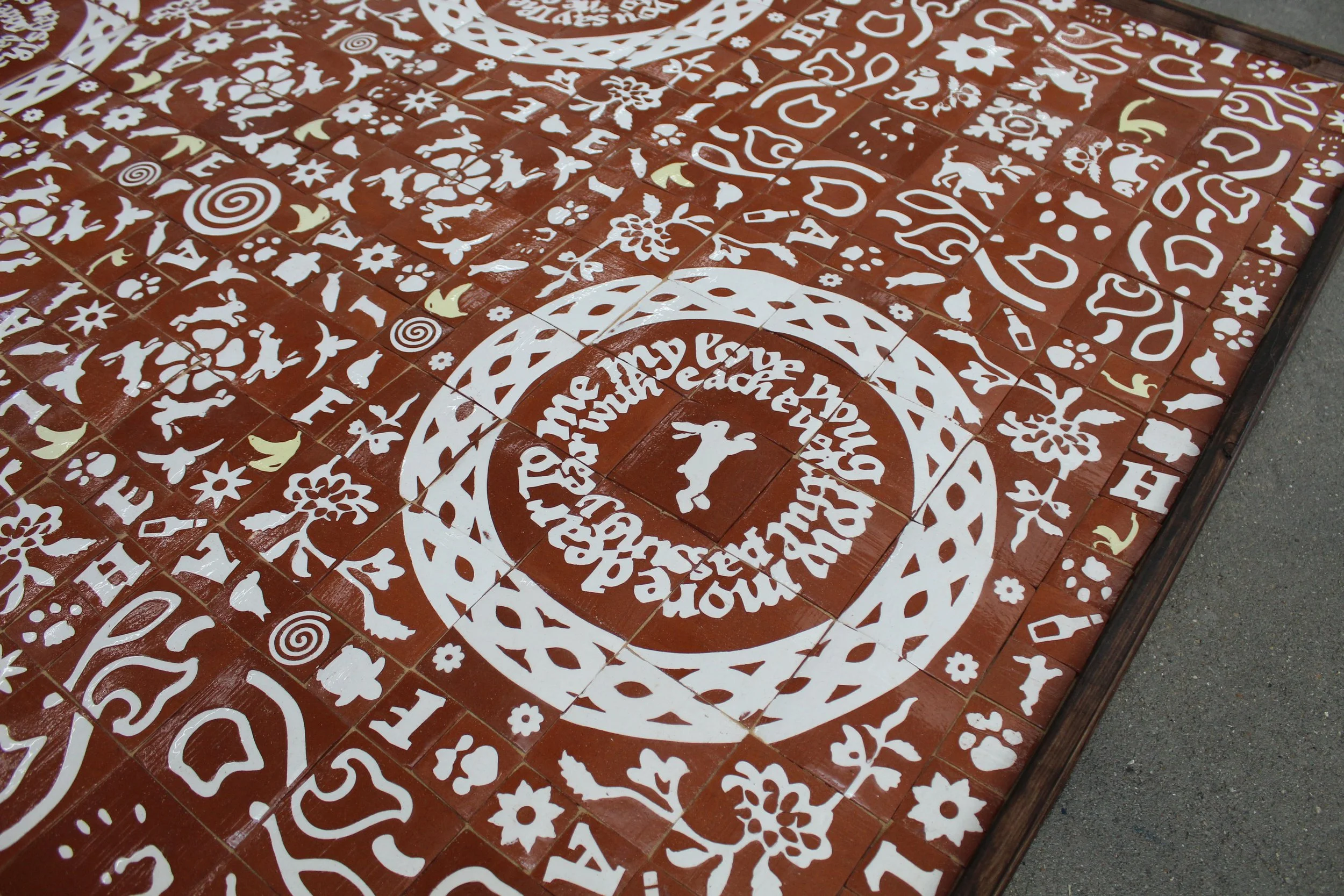
Whilst completing my Master’s Degree at the Royal College of Art I made a 513 tile floor using what I learned about the history and material processes of this craft, and you can read about and see pictures of it here: